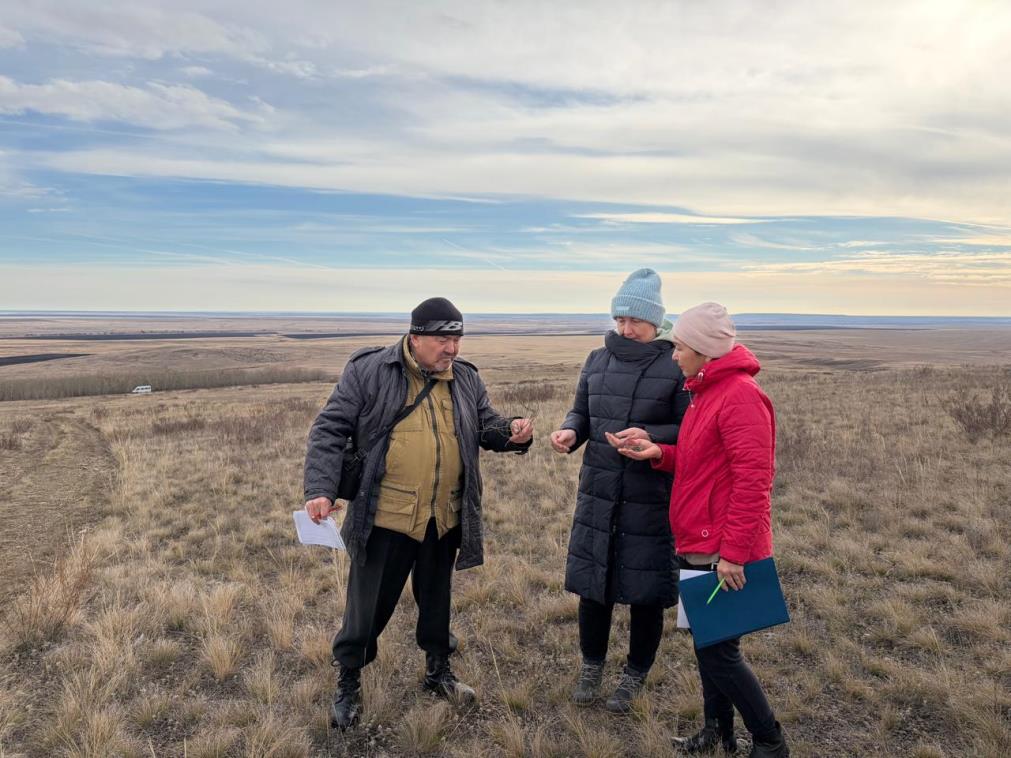




In 2023-2025, the university implemented the BR21882122 programme-targeted financing project in collaboration with Al-Farabi Kazakh National University “Sustainable development of natural-economic and socio-economic systems of the West Kazakhstan region in the context of green growth: complex analysis, concept, forecast estimates and scenarios” by the Science Committee of the Ministry of Science and Higher Education of the Republic of Kazakhstan. University scientists studied the state of feed resources in Western Kazakhstan.
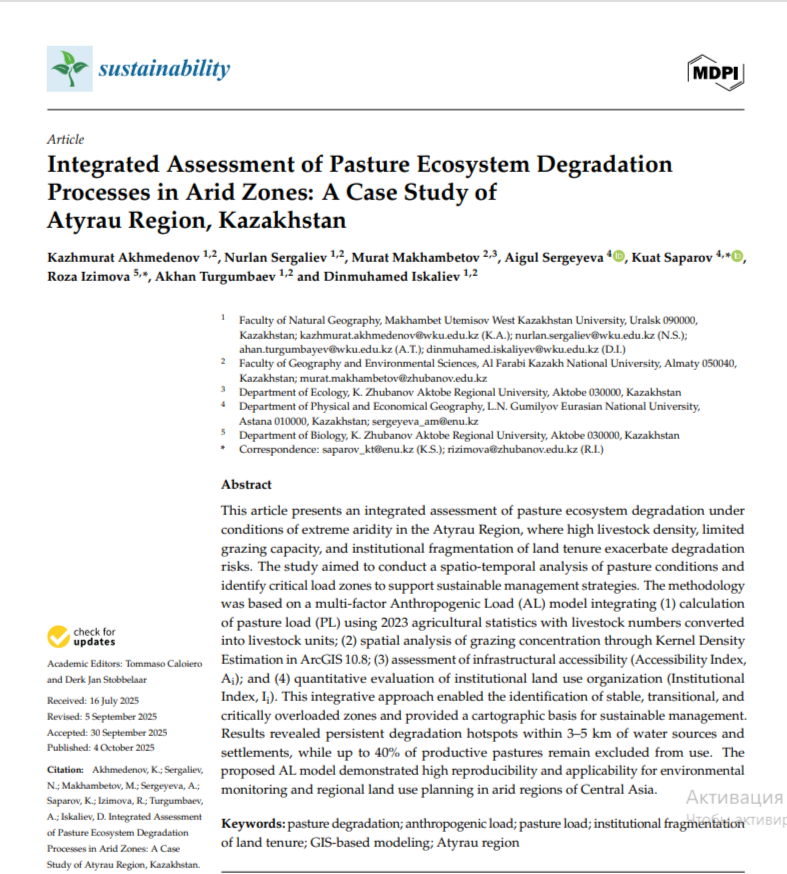
Based on the results of the research, an article was published by Kazhmurat Akhmedenov, Nurlan Sergaliev, Murat Makhambetov, Aigul Sergeeva, Kuat Saparov, Roza Izimova, Akhan Turgumbayev, Dinmukhamed Iskaliev ‘Integrated Assessment of Pasture Ecosystem Degradation Processes in Arid Zones: A Case Study of Atyrau Region, Kazakhstan’ in the journal Sustainability (JCR - Q2 (Environmental Studies) / CiteScore - Q1 (Geography, Planning and Development).
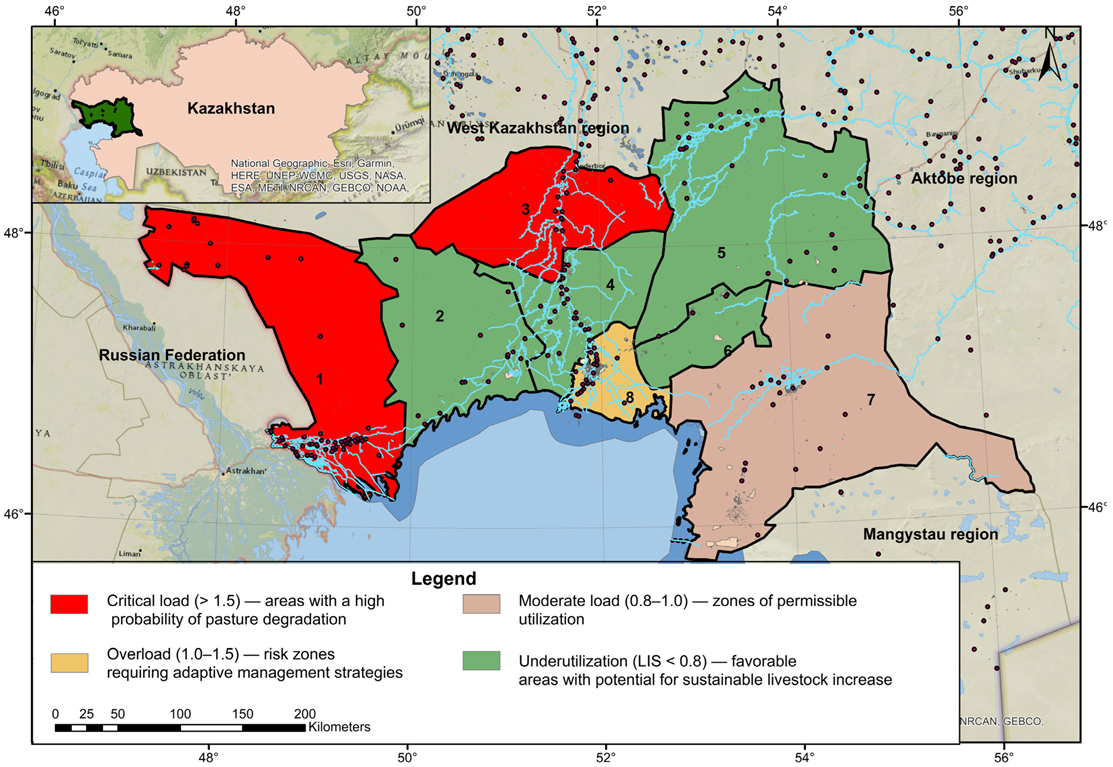
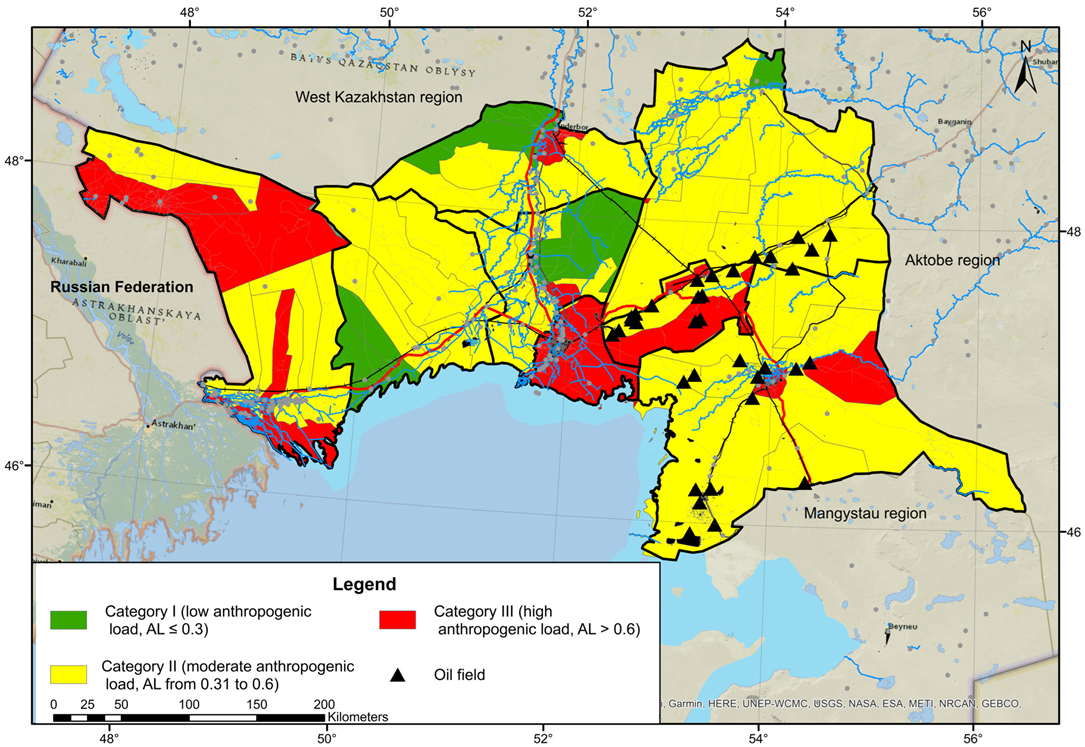
This article presents an integrated assessment of pasture ecosystem degradation under conditions of extreme aridity in the Atyrau Region, where high livestock density, limited grazing capacity, and institutional fragmentation of land tenure exacerbate degradation risks. The study aimed to conduct a spatio-temporal analysis of pasture conditions and identify critical load zones to support sustainable management strategies. The methodology was based on a multi-factor Anthropogenic Load (AL) model integrating (1) calculation of pasture load (PL) using 2023 agricultural statistics with livestock numbers converted into livestock units; (2) spatial analysis of grazing concentration through Kernel Density Estimation in ArcGIS 10.8; (3) assessment of infrastructural accessibility (Accessibility Index, Ai); and (4) quantitative evaluation of institutional land use organization (Institutional Index, Ii). This integrative approach enabled the identification of stable, transitional, and critically overloaded zones and provided a cartographic basis for sustainable management. Results revealed persistent degradation hotspots within 3–5 km of water sources and settlements, while up to 40% of productive pastures remain excluded from use. The proposed AL model demonstrated high reproducibility and applicability for environmental monitoring and regional land use planning in arid regions of Central Asia.
Reference to the article: Akhmedenov, K.; Sergaliev, N.; Makhambetov, M.; Sergeyeva, A.; Saparov, K.; Izimova, R.; Turgumbaev, A.; Iskaliev, D. Integrated Assessment of Pasture Ecosystem Degradation Processes in Arid Zones: A Case Study of Atyrau Region, Kazakhstan. Sustainability 2025, 17, 8869. https:// doi.org/10.3390/su17198869